
New regional security arrangements exclude US, focus on threat from Greater Israel
Rumble link Bitchute link
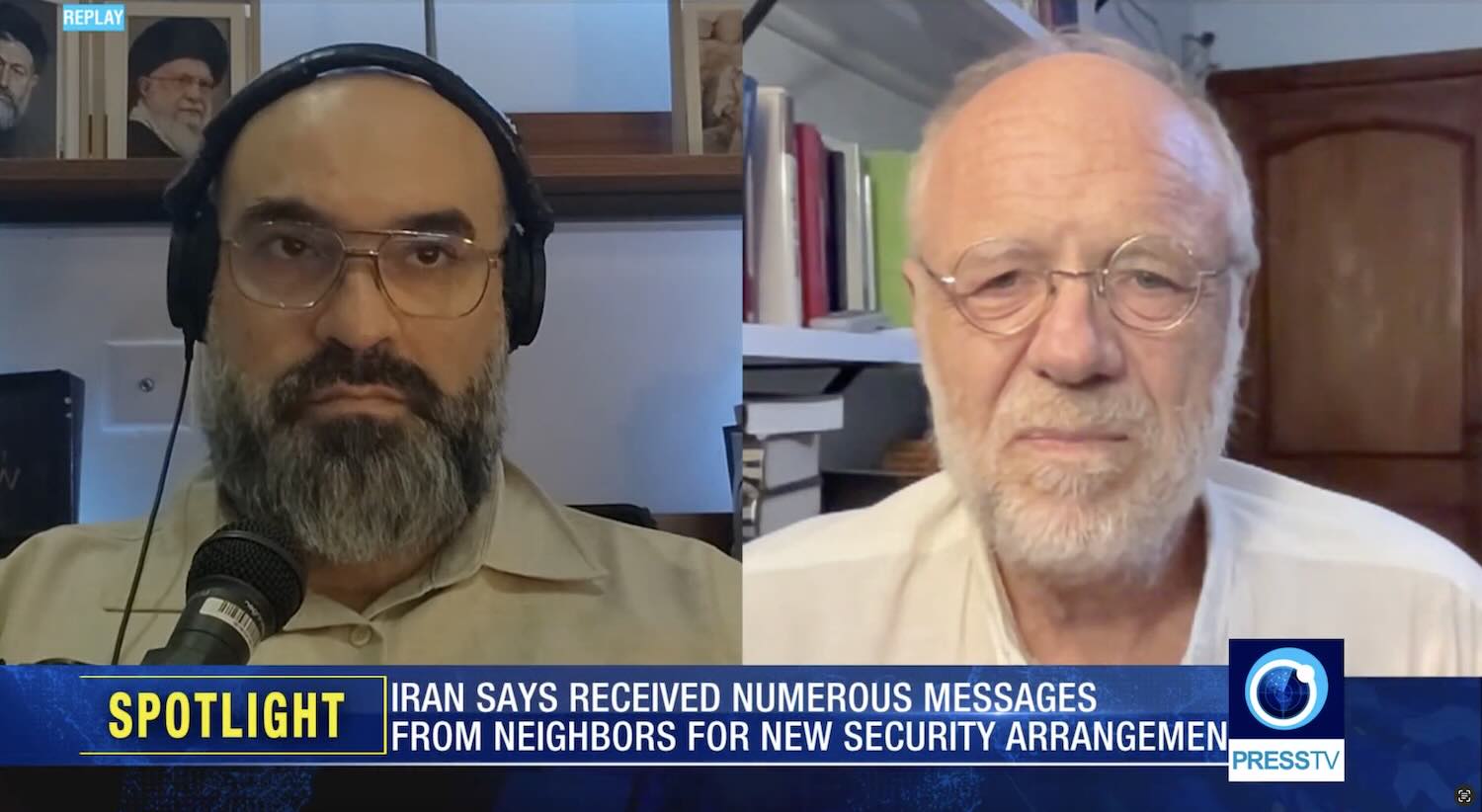
Iran says it has received numerous messages from neighboring countries regarding new security arrangements for the region. Tehran argues that the United States, through its bullying and disregard for the interests of its allies, has put their security at risk. According to Iran’s Parliament Speaker, Mohammad-Baqer Qalibaf, lasting peace and security can only emerge from a homegrown, independent regional order. This edition of Spotlight examines what these proposed security arrangements might entail and how they could reshape the region’s security landscape.
Transcript
Press TV: Good evening. In tonight’s Spotlight, we examined the emerging security arrangements in West Asia and whether the region is witnessing the beginning of a fundamentally new security order. Iran says it has received messages from neighboring countries seeking to shape new regional security arrangements as questions grow over the future of an American security architecture that has dominated the Persian Gulf for decades now. The 40-day war and Iran’s control over the Strait of Hormuz have demonstrated the vulnerabilities of that system, while even the disruption of the Bab al-Mandab Strait has shown how quickly regional conflicts can reverberate across the global economy.
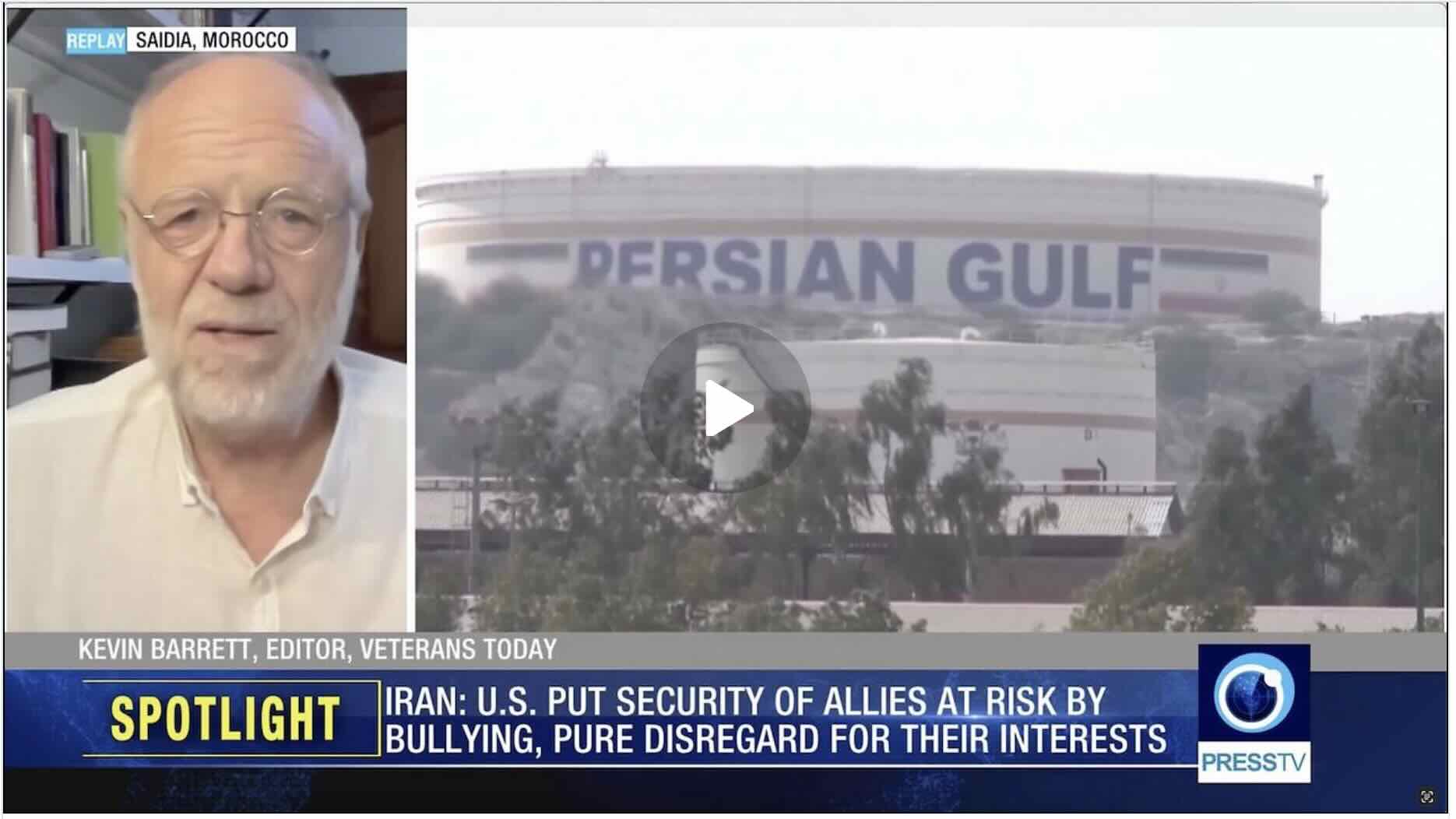
So what would a genuinely independent regional security architecture look like? What happens to the American military bases if regional states no longer see Washington as the guarantor of their security? And are Hormuz and Bab Al-Mandab Straits becoming the foundations of a new balance of power in West Asia? That’s what we’ll be discussing tonight with our guests. Reza Vedadi, academic researcher and author, join us from Muscat, Oman. And Kevin Barrett, editor of Veterans Today, join us from Saida, Morocco. Gentlemen, both of you, thank you so much for being with me. I’m going to begin with Mr. Vedadi, our guest in Muscat. Reza, what is exactly changing at this moment? Qalibov says Iran’s neighboring countries are now sending messages about new security arrangements. What has changed since the 40-day war such that right now regional states are pushing and reconsidering the old security framework?
Reza Vedadi: We’ve witnessed since the Ramadan attack in the end of February, beginning of March on Iran, that Iran has put a lot of military pressure on the U.S. basis. And it’s demonstrated the U.S. capability, as it was promised for 20, 30 years to the purchasing people, the Arabs, the Persian Gulf countries, that it’s not capable or it will not be used to defend them. It was mainly used to try and defend Israel. And so I think these Arab leaders have come to a conclusion that they can’t rely on the United States’ promise of defending them, no matter how many billions they have spent on establishing the bases, buying the military equipment, and maintaining these bases. So I think they’ve come to a realization that they need to work with either regional powers, such as Turkey and Pakistan, with the Mecca agreement, or actually working with Iran in a capacity that will demonstrate that they will not want to be party to a country that attacks it.
So I think we have to see how things unfold. The fact that the United States isn’t capable militarily to try and defeat Iran and has resorted to the sanctions which it has been committing for many, many years, maybe many decades, and hasn’t worked, in the sense that it hasn’t collapsed the Iranian government and system.
I think the leaders realize that they need to have a new approach to the issue of Iran and relations with Iran.
Press TV: Thank you, Mr. Vedadi. I’m going to come back to that. Mr. Barrett, thank you so much for your time as well. When we are talking about a new regional security arrangement, in your mind, what would that actually look like in practice? Is it joint maritime security? Is it mutual defense commitments? Is it intelligence cooperations or something beyond?
Kevin Barrett: Well, one would hope that it would involve all of that. And it could involve a major upgrading of relations between Iran and its neighbors. Those relations have remained very stressful, mainly not so much because of any real clash of interests between Iran and its neighbors, but rather because the United States Empire is dominated by Jewish Zionist billionaires who have hijacked the United States and made the expansion of this settler colony squatting in occupied Palestine their number one priority. And since Iran, since the 1979 Islamic Revolution, has been led by people of principle who refuse to abandon the Palestinians to the genocide that the Zionists are trying to force on them, that has led to this conflict. And because the other nations have essentially been willing to remain U.S. vassals, they’ve been dragged into the conflict with Iran. And all of these other issues that come up, whether it’s the Islamic Republican governance versus hereditary monarchies, or whether it’s sectarianism, these are actually secondary. The prime issue has been the fact that Iran has been made the enemy of the Zionist-occupied American empire which has forced that enmity on the regional countries. And that hasn’t worked out for the regional countries. As the other guest accurately said, putting American bases in that region whose real purpose is to try to defend endless Zionist expansionism in the Greater Israel Project from Iran has not been advantageous to those countries. On the contrary, it’s put targets on their backs. And when the United States and Israel launched this dastardly attack in the Ramadan War, the latest episode of an escalating U.S.-Zionist war on Iran, this has totally changed the situation—because Iran finally was forced to break out of its conservative, defensive posture. And so it’s going to be up to the region to pick up the pieces. And we’re seeing movement in that direction with the Mecca Accords and with these new communications between Iran and regional countries aimed at creating a win-win security arrangement in the region that doesn’t have to be directed from Washington or Tel Aviv.
Press TV: Mr. Vedadi, there are two questions that I wanted to put to you. Number one is, has the war demonstrated to the Persian Gulf Arab countries that Washington is ultimately prioritizing Israeli security rather than their own security? And if there are bases in their countries, it’s because of Israeli security, not because of their countries. And how seriously, because this was a part of your previous response, how seriously do you take, for example, what happened in Mecca? Because some analysts have been saying that there was a security agreement between Saudi Arabia and Pakistan before the 40-day war, but it didn’t help the Saudis. What’s your response to that?
Reza Vedadi: I think if we zoom out, we notice that the Arabs in the Persian Gulf, and I would say as far as even South Korea, have noticed that the Americans will take resources from these regions to provide support for the Israelis and protect the Israelis. So it’s not just the Arabs that have noticed this, but I think many in the world who are either allies with the United States or work closely with the United States have realized that the United States is in the country that it’s promising to be in its defense of these regions that it’s integrated in (for nefarious purposes). And with regards to the pact, yes, you’re correct. The Saudis had an agreement with the Pakistanis. And even further, some have stated that the Saudis have funded the Pakistani nuclear weapon program. And one of its promises to the Pakistanis was that if Saudi Arabia ever needed a nuclear weapon, Pakistan would provide that to them. But going further, seeing that Turkey has come to some kind of agreement—we don’t know the exact details of the agreement—but an agreement with Saudi Arabia and Pakistan is interesting, because right now we’ve seen that the Israelis have attacked bases that belong to Turkey or are managed by the Turkish forces in Syria. So is this a prelude to a possible confrontation between Turkey and Israel?
And we also know that Israel has discussed on many occasions that once they dismantle and destroy Iran, the next country that they wish to go to is either Pakistan, they’ve mentioned in previous discussions, or Turkey. So maybe these countries have realized that the United States is engaged in protecting its colonial outpost, Israel, in the region, and that if they want to be secure, maybe they need to work together. And they’ve stated also that this pact is not against Iran. So if it’s not against Iran, who else would it be but possibly Israel?
Press TV: That’s right. Mr. Barrett, do you also see that the Arab countries in the Persian Gulf have finally change course and realize that the United States is pursuing Israeli security with the bases in their countries?
Kevin Barrett: Yes, I think they’re recognizing that the threat posed to them by Israel is much greater than their problems with Iran, and that indeed their problems with Iran, as I mentioned earlier, grow out of the U.S. relationship with Israel. And I think they also noticed that as much as they like to be afraid of Iran as an example that could lead their people to rise up against the current rulers and install governments that would be more representative and Islamic, the Americans have managed to leverage that and use that to sort of shepherd these countries into their way of seeing things, which ultimately mainly benefits the Israelis. The Americans have said, “we have this plan to contain Iran, contain the Islamic Revolution,” and the local despots and monarchies have been willing to buy into that. But actually, there hasn’t really been an overriding threat to anybody’s stability from Iranian operations, etc. This has been overblown. And I think these local countries, now that they’re being damaged so heavily by a war that is the product of Israeli expansionism—the Israelis force their American golem to attack Iran—this is creating all kinds of havoc and a very serious catastrophic threat. That is, if the Israelis get their way and manage to talk the Americans into, or even do it themselves, do some kind of horrific really massive attack on Iran, then whatever level of damage that Iran suffers, it will be able to retaliate both against the Zionist entity and then against the regional countries that are complicit in the war. And that actually threatens these countries almost existentially. And so they need to remove that threat. And then they also need to remove the threat, the long-term or even medium-term threat, of the Greater Israel Project, which covets the land of Saudi Arabia and perhaps even Turkey as well as many other countries in the region.
And as the other guest pointed out, the Israelis just attacked Turkey. They attacked a Turkish base in Syria, and they’ve made no bones about the fact that they’re planning a war with Turkey. I think that in the short term, these countries have sold the Mecca arrangement to the Americans as if it sort of looks like it’s against Iran and the Axis of Resistance. And so the Americans will accept it.
But it’s really part of a growing recognition that the real security threat to the region comes from the messianic-millenarian genocide perpetrators in Occupied Palestine.
Press TV: The first question that comes to mind when we are talking about regional countries and states beginning developing their own security arrangements in this region is: What happens to the U.S. bases that already exist?
Reza Vedadi: Well, the question is, how much of these U.S. bases still exist? The majority have been destroyed. And the question then is: Do these Arab countries want to rebuild these bases? And why would they want to rebuild them, if they know they’re magnets for missiles and drones? And if they don’t do the stated job of defending the country, why would they rebuild them? And the question is, would even the United States be capable of rebuilding as the Strait of Homuz is closed, the military ships from the United States are not capable of entering and trying to bring equipment and supplies. So the question then arises that if the Arab leaders have realized that there’s no point in rebuilding them. If they were not there, they would most probably not be attacked, because there would be no reason for Iran to attack them. So it’s best for them not to be rebuilt. And so that’s a problem for the United States.
And regarding the kind of security architecture for the region, they will then work with regional powers, and Iran is one of them, along with Pakistan, Turkey, possibly Egypt, to try and come up with a plan to provide security for themselves. And if you really look at the history of the region, Iraq attacked Iran and Kuwait because it was encouraged by the U.S. to attack these countries. And all the other major wars are instigated by Israel against its neighbors. And the other conflicts are usually civil wars that were arranged and organized covertly by Israel—its agencies, CIA, Mossad and other agencies in the West. Syria, for example, and Libya. So if these kind of influences are removed from the region, the question arises, would the region automatically have more stability and the neighbors would not necessarily have reasons to go at war? They may have disagreements, they may have certain conflicts, but it would not lead to military conflict like we have seen in the last 40, 50 years.
Press TV: Mr. Barrett, could we eventually see a reduction of the U.S. military footprint in the West Asia region? Or would you say that Israel will not let that happen?
Kevin Barrett: Well, I think we’ve already seen it. The American bases have been decimated. And they can’t rebuild, as the other guest said. The ships that would bring in rebuilding equipment have to go through the Strait of Hormuz, which is now under de facto Iranian control. So it’s a new world now.
There’s a wonderful novel by Abdul Rahman Munif, the great Saudi novelist, about the Americans coming to that region and establishing themselves. And they come in ships, and they bring all of this material out of those ships, and they build their bases, and they take over, and they basically destroy everybody’s lives.
Now, if they want to come back and rebuild and keep destroying people’s lives in the region, they have to come through the Strait of Hormuz. And it’s closed to them. I think it’s inevitable that the American footprint in the region will be downgraded, both because of that simple logistical military factor and also because, as mentioned, the other countries in the region are now waking up to the fact that the U.S. is not protecting them and keeping the peace. The U.S. has been harassing them, degrading them, and imposing wars on them in order to keep them divided and conquered, to prevent them from ever becoming strong enough to challenge the Israeli genocide perpetrators.
That’s what this has really been all about. The other guest is right. The Americans were responsible for the Iraqi invasion of Kuwait. Ambassador April Glaspie sent a message to Saddam Hussein saying, “we have no objection to any inter-Arab dispute. Go ahead and invade Kuwait.” That was a setup.
And that was just one example of how so many of these conflicts, including the decimation of Libya and the rest of these seven countries in five years—though it’s taken more than five years—that were targeted by the 9/11 Israeli false flag attack on Washington and New York back in 2001.
All of this destabilization has been designed to keep the region weak and divided. And the region is waking up now, and it has a chance to get past that, to create new institutions that will prevent that region from being victimized the way it’s been victimized by the Zionist-controlled U.S. empire, which wants the region weak, divided, which wants to keep mowing the lawn. Not just in Gaza, but all these other wars in the region, are a form of Zionists mowing the lawn to keep the region weak and destroyed so that the Zionists can be the strongest party in the region and they can dream of establishing their Greater Israel Project. Well, the region is on to them now, and I don’t think it’s going to let them do it.
Press TV: So Reza Vedadi, let’s talk about the Strait of Hormuz. How has Iran’s ability to control the strategic waterway of the Strait of Hormuz changed the strategic calculations of every country in the Persian Gulf region?
Reza Vedadi: Well, it’s surprising. The United States thought they could come in and attack Iran and there’ll be no consequences. And then Iran has learned a new strategy where if Iran is going to suffer under economic, military, political pressure, then the rest of the world, which has stayed silent for 47 years when all of the sanctions from the West were levied on Iran, and countries like Korea and Qatar and Japan would withhold Iranian funds that belong to the Iran, have realized, well, then the rest of the world will have to go along and suffer with Iran as well. And so this closing the Strait of Hormuz is a mechanism which is not a nuclear weapon, but it’s more devastating than a nuclear weapon because it puts pressure on the regional countries to think more carefully about who they work with against Iran, who they allow to come and use their territory to attack Iran.
But it also is a method of leverage against countries That have followed the U.S. sanctions on Iran, when they didn’t have to, but they did it out of pressure because they are close to the United States. And so now you see these countries coming and trying to build a relationship so that their ships can come through, that the supply of oil can come to their countries and they don’t suffer from the lack of petroleum products. And you have to understand that it’s not just petrol. It’s all the other products that come through the Persian Gulf, such as fertilizers, gases and so forth needed for microchip building.
So I think Iran is utilizing its military capability, its doctrine that has worked on for 20, 30 years to utilize the Strait of Hormuz in a way where it’s not killing individuals, but it’s using it to pressure governments to act more justly.
Press TV: Mr. Barrett, are we seeing a West Asian regional expression of a much larger transition to a multipolar world order?
Kevin Barrett: Yes, I think that is what’s happening. And in the long term, the United States and the West have lost their overwhelming preponderance of global GDP, their lead in production and technology. And the U.S. in particular has divested of its production by sending its manufacturing abroad to places with cheaper labor. And so for that reason today, the productive capacity of China vastly outstrips that of the United States. And the rest of the global south has also greatly narrowed the gap. The U.S. had about half of global GDP, and most of global gold supplies, immediately after World War II. And today it’s down pushing 15 percent of global GDP and heading downward. And that’s probably exaggerated because it measures all of these metrics that are really not productive metrics. If you do real GDP based on actual production, then the U.S. looks even worse. And so you can’t continue to rule the world with maybe 10 percent of real global GDP the way you could when you had 50 percent of global GDP. You just can’t. And it’s no longer a unipolar world in that sense. And so we are seeing a transition in the empire, this American empire, which is dominated by wealthy Jewish Zionists. And the Zionist oligarchs, the Epstein class, is flailing around trying to find a solution to this. And they’re hoping that artificial intelligence will allow them to brainwash the entire global population into accepting their misrule. But I don’t think they’re going to have too much luck with that. China’s AI program is much more sensible and focused.
And so I think that we are seeing the American empire stepping back. They’re almost admitting it now. They’re threatening their own allies. Threatening South Korea, attacking Canada, slapping tariffs on Canada, threatening Oman, using profane language to threaten Oman, profanity coming out of the White House. It’s a sorry spectacle. As an American, I’m embarrassed by how my country is handling the end of its empire. But that’s the way history is playing out.
Press TV: Gentlemen, thank you both. Those were Reza Vedadi, the academic researcher and author, joining us from the city of Muscat. And Kevin Barrett, editors of Veterans Today, joining us from Saida in Morocco. Thank you both. And that brings us to the end of this edition of our Spotlight program. Thank you for joining us and bye-bye.
Stripe is Substack’s only processor and they debanked me, so you can no longer pay me through Substack. Now I am posting everything on Substack free and asking people to sign up for recurring donations at my Paypal donation page…or better yet, the free speech platform SPdonate. Alternately you can Paypal or Zelle to truthjihad[at]gmail(dot)com. Note that Zelle, unlike other methods, doesn’t charge any fees.